
Australian Interior Design Trends for 2025–26 (And how to work them into your home)
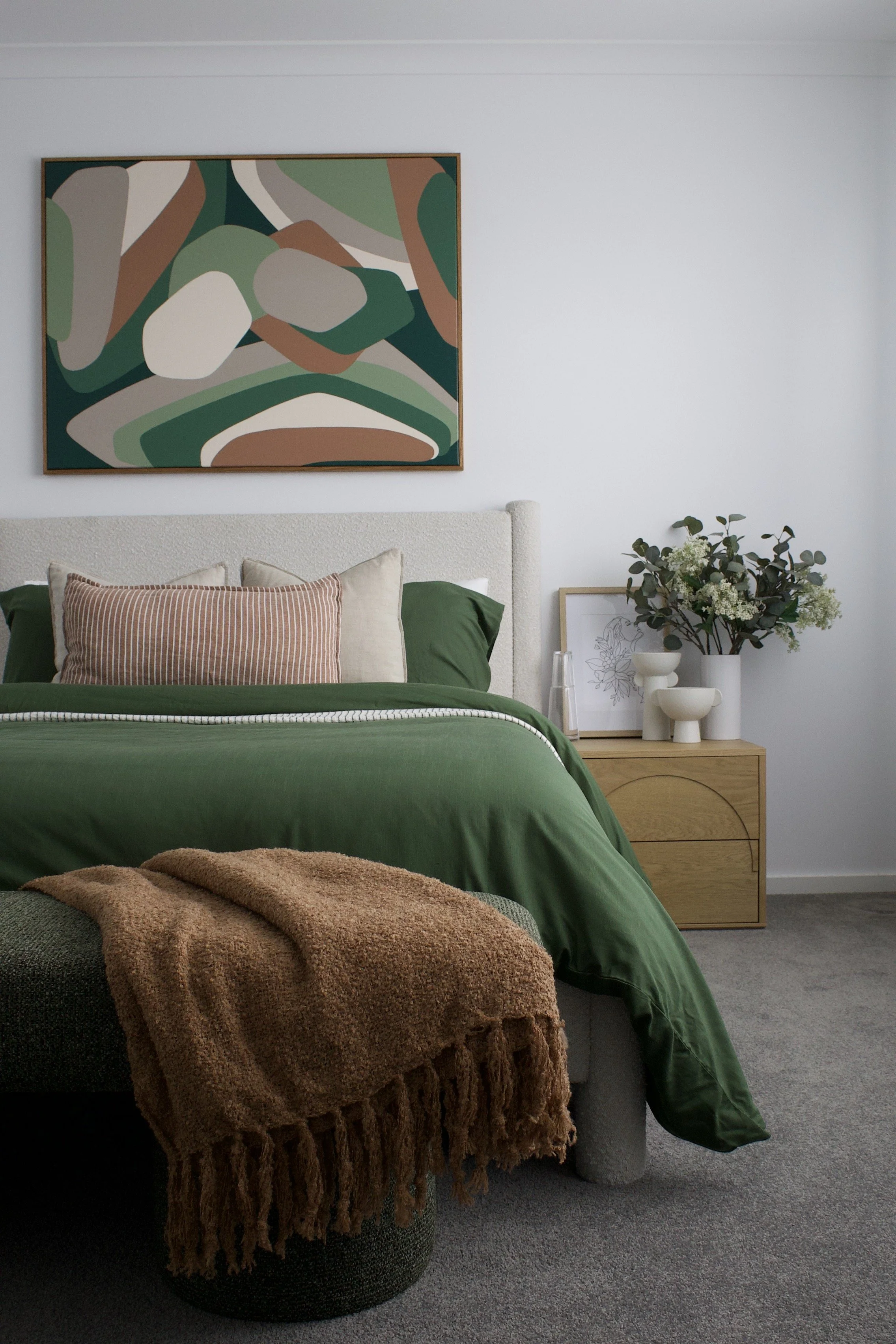
Every year the conversation around interior trends shifts; and 2025 into 2026 is one of the more interesting periods I've seen in Australian interiors.
We're moving away from the stark minimalism that defined the early 2020s and into something warmer, more personal, and more considered.
Here's what I'm seeing across the spaces I'm working on, the showrooms I'm visiting, and the homes that are stopping me mid-scroll on Instagram — and more importantly, how to actually apply these trends without your home feeling like a mood board.
1. Warm neutrals are replacing cool greys
Cool grey has dominated Australian interiors for the better part of a decade. In 2025–26, it's giving way to warmer tones. Sandy beiges, warm whites, earthy taupes, and creamy off-whites that feel more liveable and less clinical.
This shift is happening on walls, in joinery, and across furniture. If you're renovating or repainting, consider shades like Dulux Antique White USA, Taubmans Limed White, or Porter's Paints Lime White as a starting point. They read as neutral but carry warmth that cool greys simply don't.
If you're not painting, you can achieve the same effect through textiles and accessories. Swap out cool-toned cushions, throws and rugs for warmer equivalents and you'll feel the difference immediately.
2. Organic shapes and curved forms
The hard lines and sharp corners of mid-century and Scandi-influenced design are softening. Curved sofas, round dining tables, arched mirrors, and organic-shaped objects are everywhere, and for good reason. They make spaces feel more welcoming, more human, and less like a furniture catalogue.
You don't need to replace all your furniture to get this right. A curved armchair in a room of square furniture creates instant visual interest. A round coffee table in place of a rectangular one opens up a space and improves traffic flow. An arched mirror in an entry or bathroom adds architectural detail without structural work.
Start with one curved piece and see how it changes the room before committing to more.
3. Natural materials and tactile texture
Timber, linen, rattan, stone, ceramic, leather, jute… natural materials are dominating Australian interiors right now and show no signs of slowing down. The emphasis is on texture you can feel as well as see.
The key to making this work is layering. A timber dining table, linen curtains, a jute rug, ceramic vessels on the shelf, and a throw over the sofa - each material is simple on its own, but together they create a richness and depth that synthetic materials can't replicate.
Be wary of going too matchy-matchy with natural materials. The goal is contrast and variety - smooth against rough, light against dark, matte against a subtle sheen.
4. Statement ceilings
The fifth wall is finally getting its moment. Painted ceilings, limewash finishes, timber panelling, and wallpapered ceilings are appearing in Australian homes with increasing confidence, and the effect is transformative.
In a rental or low-intervention context, a ceiling-mounted light fitting or pendant (properly installed) does a lot of the same work - drawing the eye upward and making the room feel taller and more considered. A coat of paint on the ceiling (with landlord permission, or using a temporary approach) is also worth pursuing if you can negotiate it.
For owners, a painted ceiling in a deep tone - navy, forest green, terracotta, creates a sense of intimacy and drama that nothing else quite achieves.
5. Layered, collected interiors over matchy-matchy sets
The era of buying a matching furniture suite and calling it done is over. The interiors generating the most attention in 2025–26 feel collected - like they've been built up over time, with pieces from different eras, sources, and styles that work together through a shared palette and aesthetic intention.
This is great news, because it means your grandmother's side table, the vintage find from the market, and the new sofa can all coexist, if you're intentional about how they relate to each other.
The unifying elements are usually colour (they share tones), scale (they're proportional to each other and the room), and material (there's a consistent material story running through the space).
6. Biophilic design — bringing the outside in
Plants have been a staple of Australian interiors for years, but biophilic design goes beyond adding a fiddle leaf fig in the corner. It's about integrating nature into the home; through light, materials, views, and living elements.
Practically, this means maximising natural light, using natural materials (see point 3), incorporating water features where possible, and treating plants as a design element rather than an afterthought. Group plants in clusters for more visual impact, vary heights and leaf sizes, and consider trailing varieties that add movement.
In Australian homes specifically, the indoor-outdoor connection is a major asset; blurring the line between inside and outside through consistent flooring, cohesive colour, and considered planting at thresholds is one of the most powerful moves you can make.
7. Personal, meaningful objects over generic decor
There's a growing resistance to generic, trend-driven decor that could belong in anyone's home. The spaces that resonate most in 2025–26 feel personal - they tell a story about the people who live there.
This doesn't mean cluttered or precious. It means being intentional about what you keep on display, and editing out the things that are there purely by default. A shelf of objects that actually mean something to you; whether it be travel finds, inherited pieces, things made by people you know (even the kids!), will always outperform a shelf of perfectly matched accessories from a homewares store.
The editing is the work. Most people have the right objects; they just have too many of them.
Not sure where to start?
Trends are useful as a reference point, but the best interiors are the ones that reflect the people who live in them, not just what's current. If you're unsure how to apply any of these ideas to your specific space, or if you want a professional eye on a room that isn't working, I'd love to help.
My virtual eStyling services are available anywhere in Australia. No in-person visits required. Whether you need a focused styling review or a full room moodboard and selections package, there's an option for every budget and brief.
Explore virtual styling services →
Sasha Shanks is a Melbourne-based interior stylist and designer with a Diploma of Interior Design and Three Birds Styling School training. She offers virtual eStyling services available Australia-wide through lifeandstylewithsasha.com.